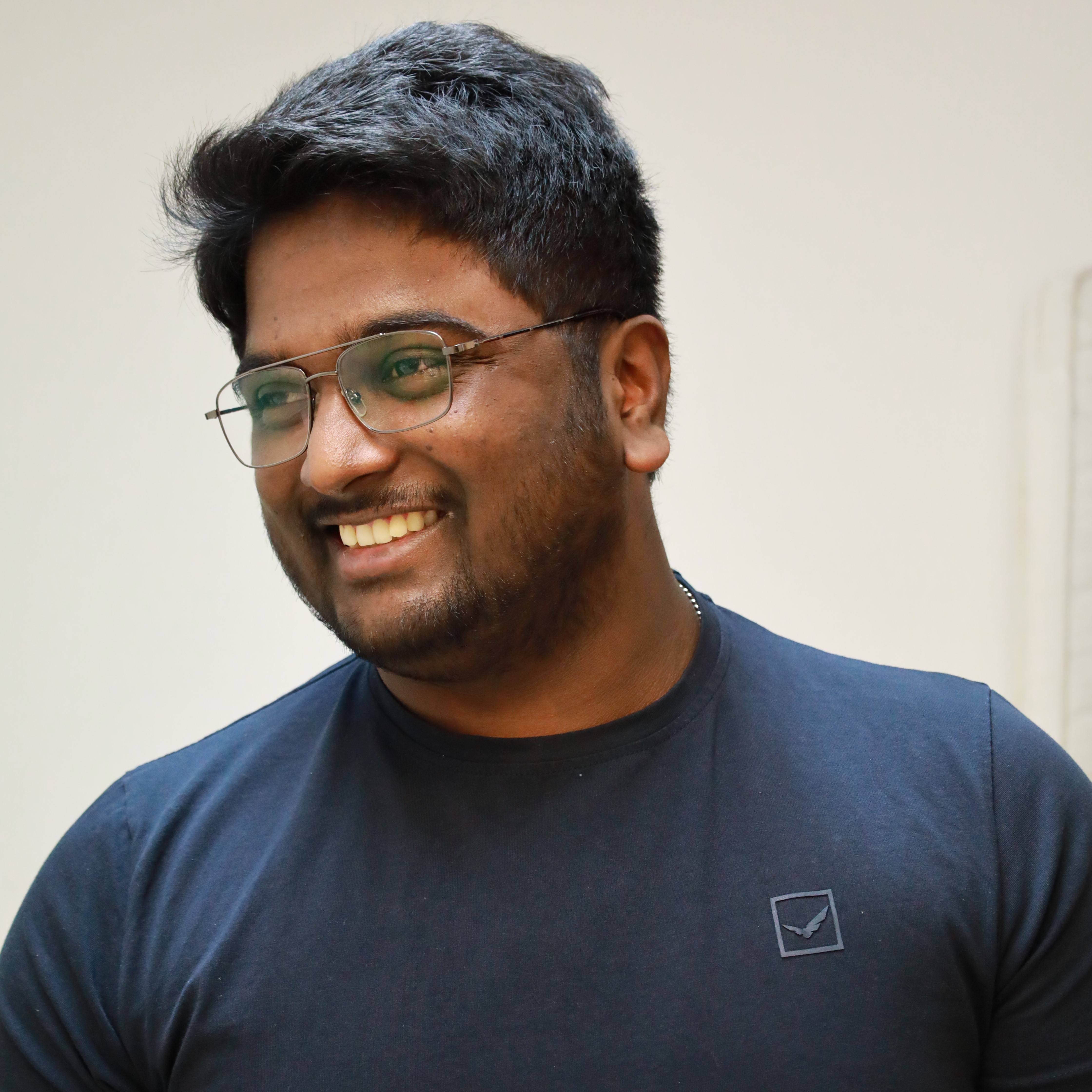
I'm RamanaMurthy Katakam, a Software Engineer at Holy Technologies in Hamburg, Germany, where I specialize in application development, testing, and maintenance. After successfully defending my Master's thesis in Digital Engineering at Bauhaus-Universität Weimar, I now bring deep expertise in Python, OpenGL, Qt framework, and modern software deployment to craft robust applications and seamless user experiences.
My current work involves developing desktop applications using Python and Qt, creating executable distributions with PyInstaller and MSI creation, implementing comprehensive testing strategies, and integrating APIs to enhance application functionality. Whether it's building intuitive GUIs with OpenGL visualizations, ensuring code quality through rigorous testing, or maintaining production-ready software, I focus on delivering reliable and scalable solutions.
Passionate about continuous learning and innovation, I'm constantly exploring new technologies and methodologies in software engineering, API integrations, and application architecture to stay at the forefront of modern development practices.
Developing robust desktop applications using Python and Qt framework with advanced OpenGL visualizations for enhanced user experiences. Creating comprehensive deployment solutions using PyInstaller for executable creation and MSI packaging for seamless software distribution across enterprise environments.
Implementing rigorous testing methodologies to ensure code quality and reliability, while maintaining and optimizing existing software systems. Leading API integration projects to enhance application functionality and enable seamless data exchange between systems. Continuously expanding expertise in modern software engineering practices and application architecture.
Designing and developing advanced software solutions using C++ and Python for vibration analysis and signal processing workflows. Built a high-speed camera image acquisition system with real-time zoom, exposure, and tracking capabilities, replacing commercial tools and reducing analysis time from 2 days to ~8 hours.
Developed “Animator” — a powerful 3D visualization tool for motion analysis, skeleton tracking, FRF computation, and flow path validation — cutting workflow time from 12+ hours to just 4. Integrated tester feedback in agile cycles to deliver robust, production-ready software.
Engineered scalable and high-performance C++ libraries for signal processing, numerical computation, and real-time data analysis in collaborative research projects.
Built modular components using Qt and OpenGL for data visualization and scientific experimentation interfaces. Implemented algorithms such as Fourier Transform, FFT, K-Means clustering, and SVM to accelerate analysis pipelines in multi-threaded environments.
Leading frontend and CMS development to enhance digital teaching tools. Integrated WordPress, Elementor, and MEC calendar systems for event-driven education content delivery.
Developed tools for virtual collaboration and embedded a custom chatbot into the WorkAdventure platform, improving digital learning engagement and accessibility across departments.
Collaborated with German clients to build custom, responsive websites using HTML, CSS, JavaScript, and WordPress. Delivered fast-loading, mobile-optimized solutions tailored to client business needs.
Created SEO-friendly pages with smooth UI/UX and used performance metrics to optimize navigation, accessibility, and conversion rate.
Delivered infrastructure support for enterprise systems, resolving network issues and scripting automations in Java and Linux environments.
Played a key role in improving system reliability and reducing downtime by implementing streamlined diagnostic and monitoring routines.
Successfully completed my Master's degree in a highly interdisciplinary program that integrated software development, simulation, image processing, and data analysis.
Developed applications using C++, Python, and MATLAB for tasks such as signal processing, graphical interfaces, and automation. My thesis involved building a robust GUI for converting experimental measurement data into Finite Element Analysis-ready formats, which I successfully defended in July 2025 with a grade of 1.3.
Key projects:
Built a strong engineering foundation through mechanical design, thermodynamics, and advanced CAD modeling. Gained hands-on experience using SolidWorks, Fusion 360, and CATIA.
Participated in team-based mechanical design projects and built a lightweight electric moped from concept to simulation.
Final Year Project: Lightweight E-Moped Design & Simulation using SolidWorks